
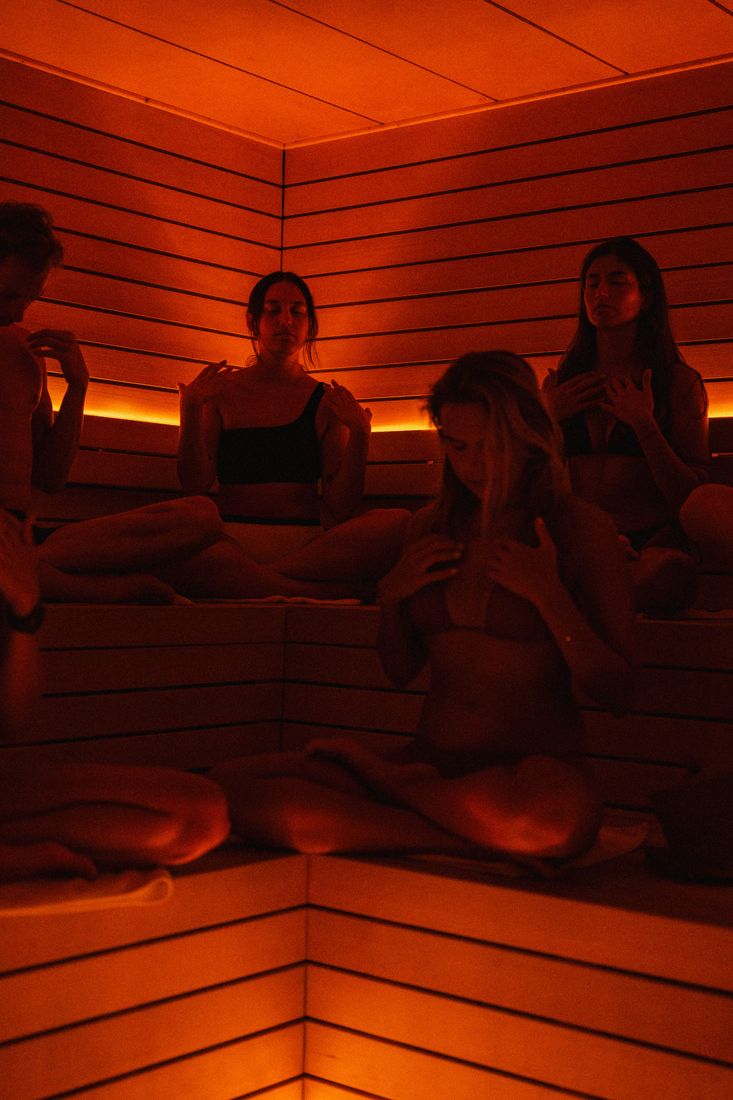
Social Wellness · Barcelona
What Is Social Wellness?
A new category of wellness combining sauna, ice baths, breathwork, and people.
A New Category of Wellness
Social Wellness is the structured practice of pairing physiological stress (heat, cold, controlled breathing) with shared social presence.
It sits between three things people already know but never combined. A spa is private indulgence. A gym is solo performance. A spiritual centre is solitary introspection. Social Wellness is the deliberate fourth: shared intensity, where the nervous system regulates in the presence of others doing the same work.
What changes when you do this together is not the temperature or the breath. It is the speed at which trust forms, the depth at which the body settles, and the meaning the experience carries when you carry it home.
How It's Different
Spa
Designed for individual relaxation. Treatments delivered to a passive guest. The room is quiet by rule.
Gym
Designed for individual performance. Output is measured. Headphones in, eyes forward.
Social Wellness
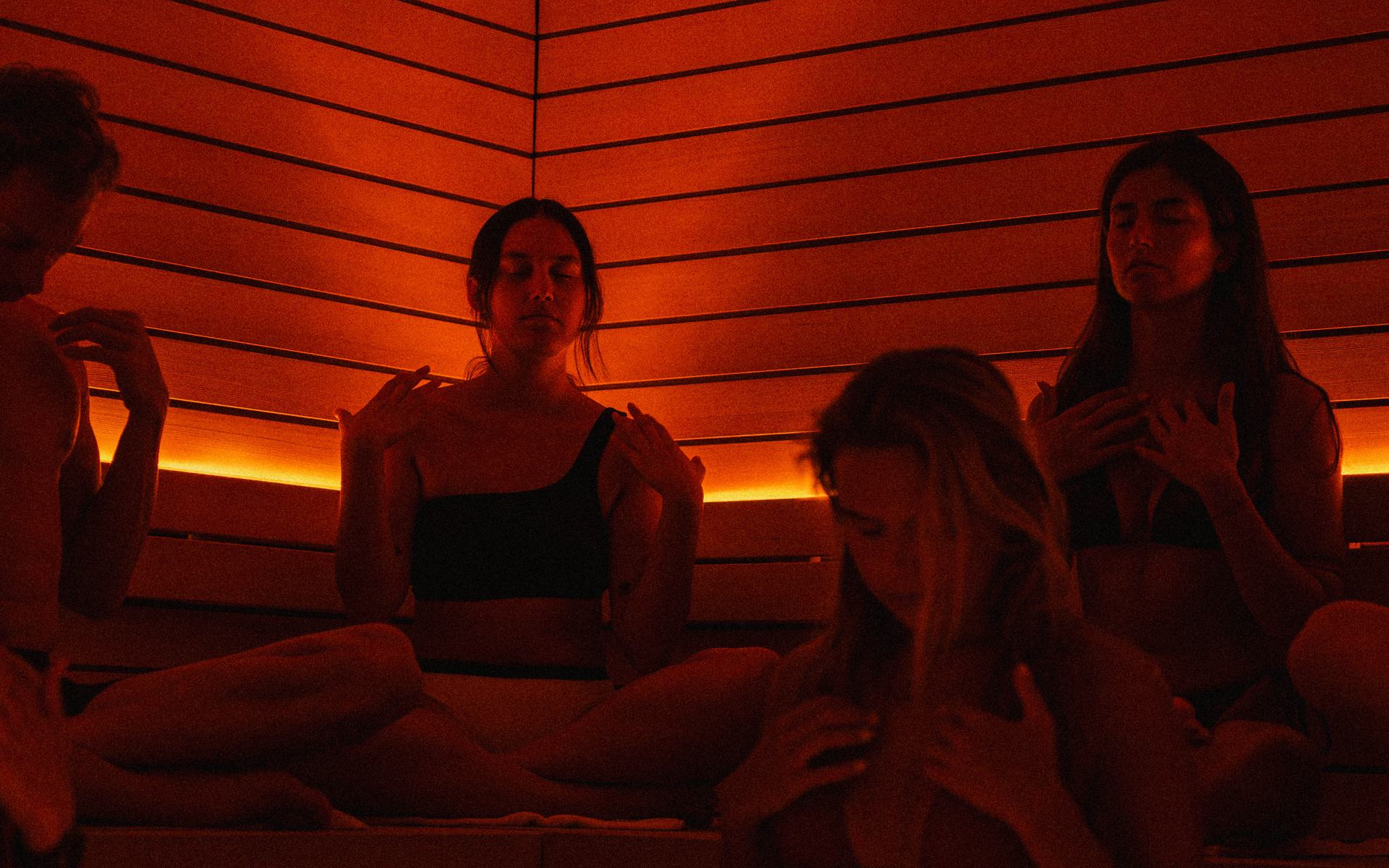
Designed for shared regulation. The protocol is contrast therapy. The setting is collective. You walk in alone and leave knowing names.
“We went to the Saturday social: great chats, atmosphere and music with all around good vibes, and we felt fully recharged after.”Alexander M. · Google
The Three Pillars
Sauna
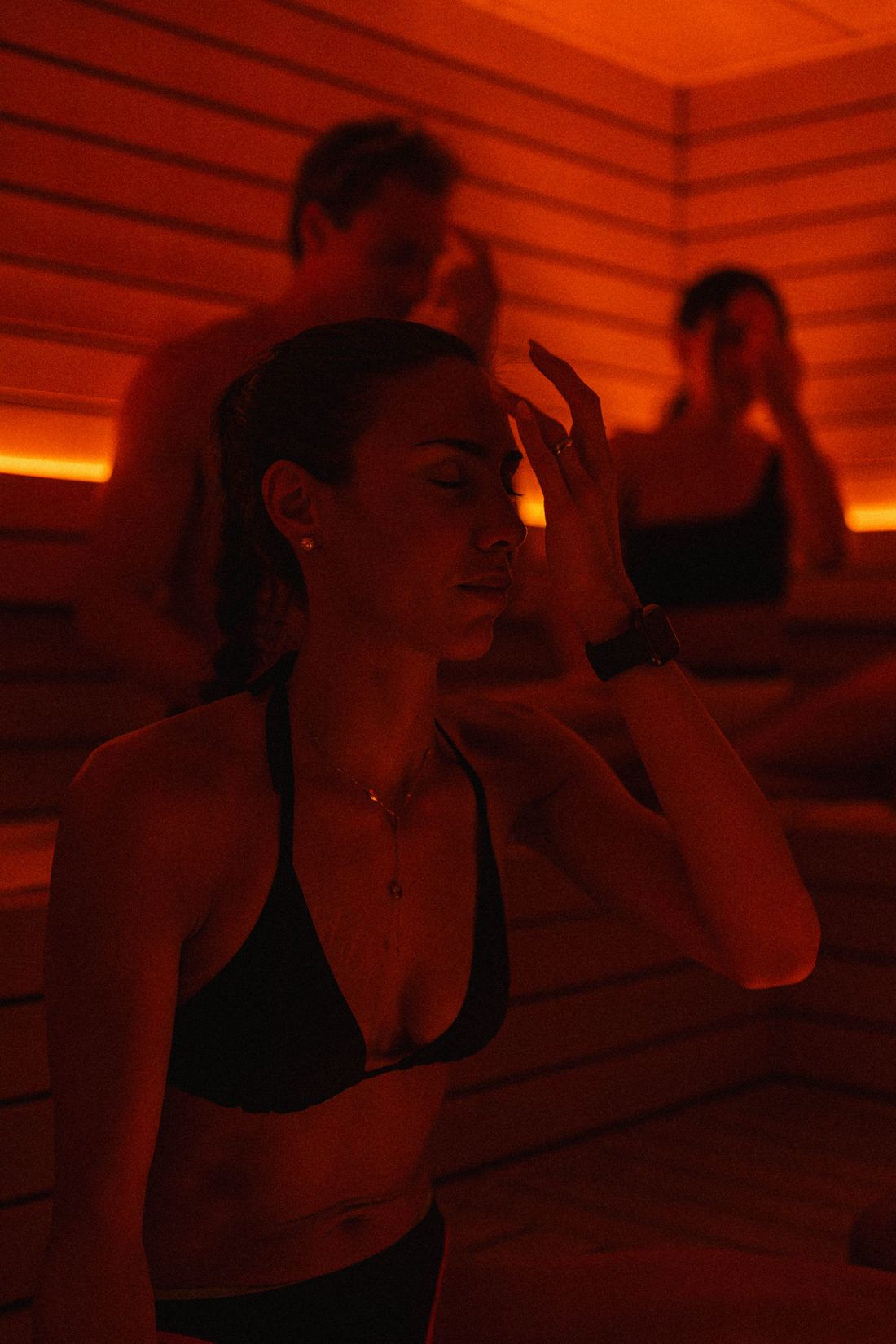
Heat exposure at 85–95°C drives a controlled cardiovascular and hormonal response. Long-term sauna use is associated with up to a 63% reduction in cardiovascular mortality risk in frequent users. In a group, the heat becomes a shared challenge, silence, eye contact, and breath in the same room.
Ice baths
Cold immersion at 4–15°C produces an acute sympathetic response, with norepinephrine rising up to 530% during exposure, and a 20–30% reduction in muscle soreness and inflammation post-exercise. Doing it next to someone changes the experience entirely: the cold is the same, the resistance to it is not.
Breathwork
Controlled breathing trains the autonomic nervous system. Regular practice is associated with a 20–30% increase in HRV-based stress resilience and 15–25% lower cortisol. In a guided group, breath synchronises. The room slows down together.
Why Doing This Together Matters
Most wellness is private by default. You sweat alone, you breathe alone, you cool down alone, and the protocol works, but a piece of it is missing.
When people share intense physiological experiences, their nervous systems entrain. Co-regulation is real and measurable: shared presence reduces the threat response, slows breath rate across the room, and increases the depth of vagal recovery during rest. Heart-rate variability, the cleanest signal of autonomic balance, climbs faster when the practice is shared.
Shared discomfort builds trust faster than shared pleasure. The cold plunge after a long sauna session is a small, voluntary, survivable hardship. Going through it next to someone, and seeing them go through it next to you, is the oldest social technology there is. The numbers we cite at the bottom of the page are the easy part. The harder thing to measure is what happens in the room, between the bodies, while the protocol runs.
Where It Comes From
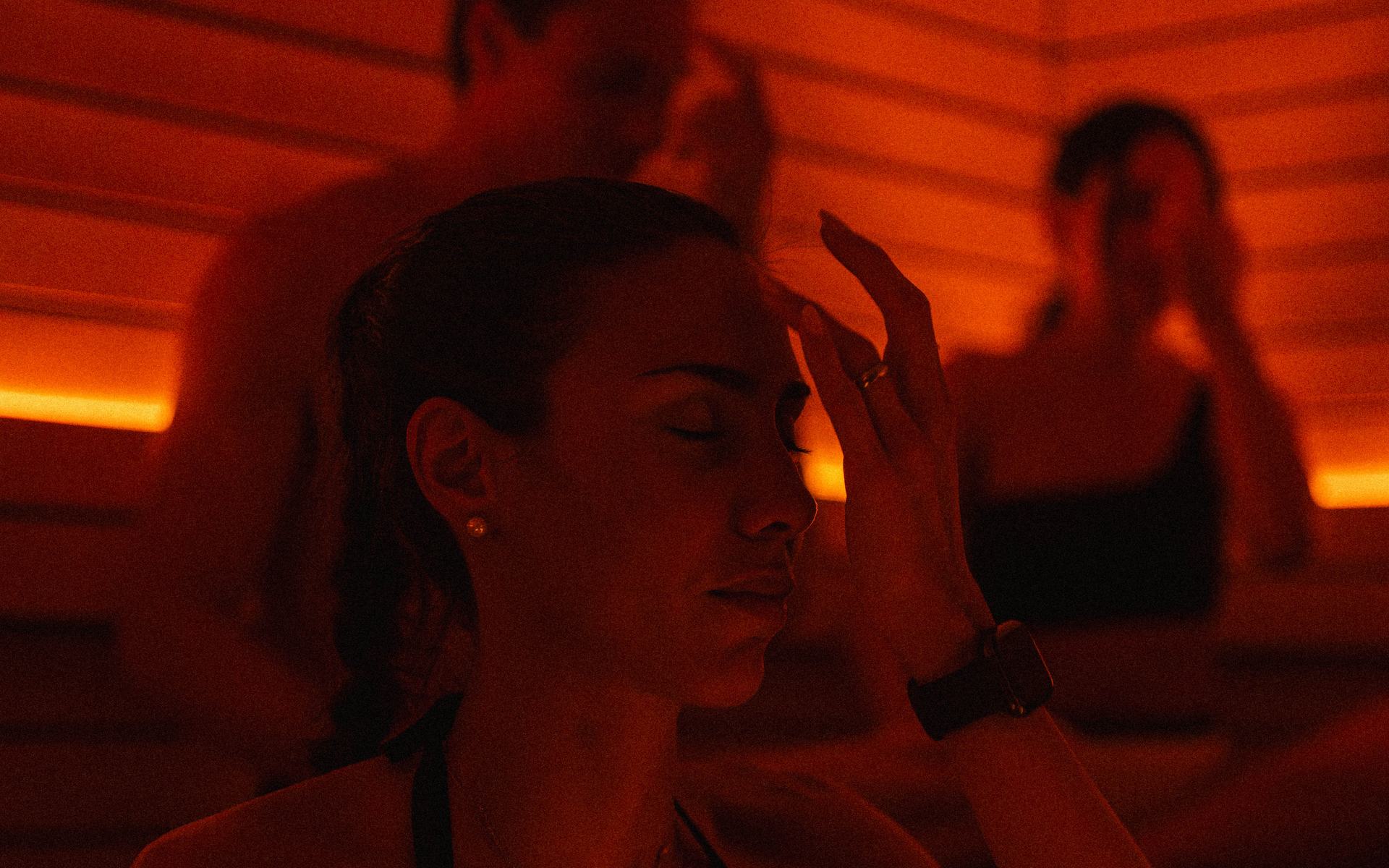
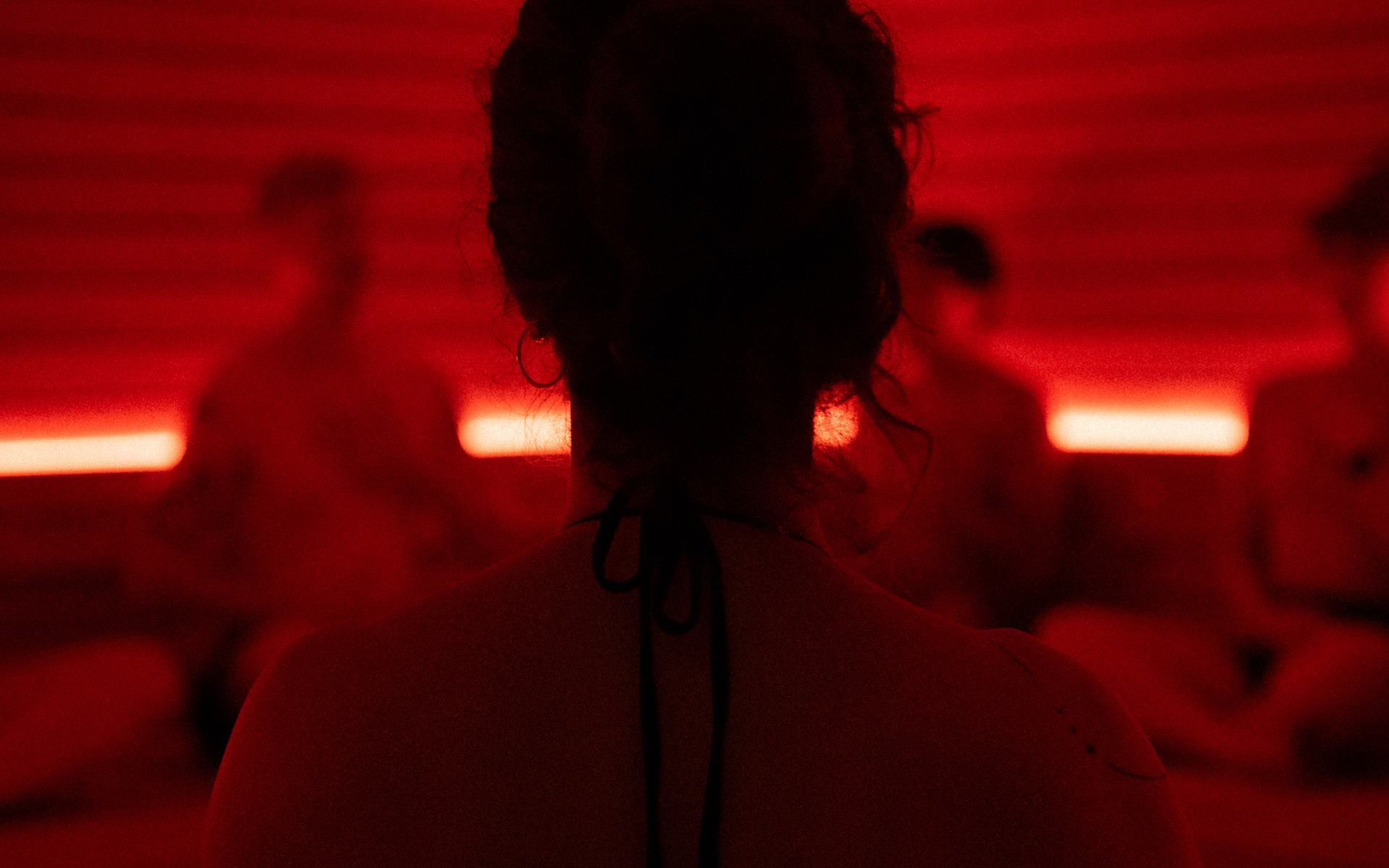
The first studios to formalise this approach opened in the last few years in cities like Toronto, London, and Zurich. They proved that pairing contrast therapy with structured group format was not a wellness fad. It was a missing category. People showed up for the protocol and stayed for the room.
ILO STUDIOS began on a different shore. The founder spent time in Thailand, where sauna and ice immersion are part of community ritual rather than private therapy. Bringing that practice back to Barcelona meant translating it into a city that already had spas and gyms but no third place built around shared regulation.
Barcelona Was Missing This
Spas are abundant in this city. Gyms are abundant. What did not exist was a structured Social Wellness studio, a place built specifically for guided contrast therapy in a group setting. ILO STUDIOS is the first one in Barcelona, and the largest sauna in the city sits at the centre of it.
Try Your First Session
The Introduction Pack is three sessions for €49, the simplest way to experience the practice.